DOSAGE AND ADMINISTRATION
Adult Dosage
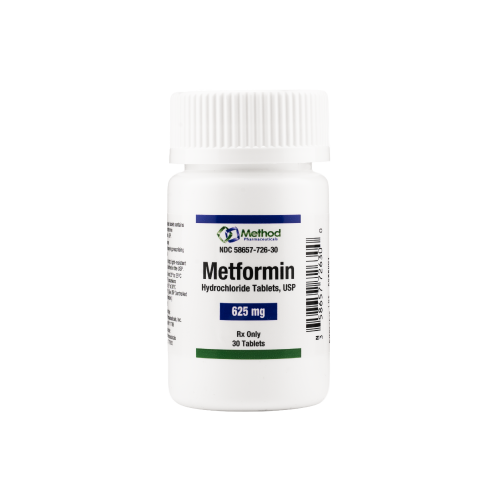
Metformin Hydrochloride Tablets
- The recommended starting dose of Metformin Hydrochloride Tablets are 500 mg orally twice a day or 850 mg once a day, given with meals.
- Increase the dose in increments of 500 mg weekly or 850 mg every 2 weeks on the basis of glycemic control and tolerability, up to a maximum dose of 2550 mg per day, given in divided doses.
- Doses above 2000 mg may be better tolerated given 3 times a day with meals.
Pediatric Dosage for Metformin Hydrochloride Tablets
- The recommended starting dose of Metformin Hydrochloride Tablets for pediatric patients 10 years of age and older is 500 mg orally twice a day, given with meals.
- Increase dosage in increments of 500 mg weekly on the basis of glycemic control and tolerability, up to a maximum of 2000 mg per day, given in divided doses twice daily.
Recommendations for Use in Renal Impairment
- Assess renal function prior to initiation of Metformin Hydrochloride Tablets and periodically thereafter.
- Metformin Hydrochloride Tablets are contraindicated in patients with an estimated glomerular filtration rate (eGFR) below 30 mL/minute/1.73 m 2.
- Initiation of Metformin Hydrochloride Tablets in patients with an eGFR between 30 - 45 mL/minute/1.73 m 2 is not recommended.
- In patients taking metformin hydrochloride tablets whose eGFR later falls below 45 mL/min/1.73 m 2, assess the benefit risk of continuing therapy.
- Discontinue Metformin Hydrochloride Tablets if the patient's eGFR later falls below 30 mL/minute/1.73 m 2 .
Discontinuation for Iodinated Contrast Imaging Procedures
Discontinue Metformin Hydrochloride Tablets at the time of, or prior to, an iodinated contrast imaging procedure in patients with an eGFR between 30 and 60 mL/min/1.73 m 2; in patients with a history of liver disease, alcoholism, or heart failure; or in patients who will be administered intra-arterial iodinated contrast. Re-evaluate eGFR 48 hours after the imaging procedure; restart metformin hydrochloride tablets if renal function is stable.
CONTRAINDICATIONS
- Severe renal impairment (eGFR below 30 mL/min/1.73 m 2)
- Hypersensitivity to metformin
- Acute or chronic metabolic acidosis, including diabetic ketoacidosis, with or without coma.
WARNINGS AND PRECAUTIONS
- • Lactic Acidosis: See boxed warning.
- • Vitamin B 12 Deficiency: Metformin may lower vitamin B 12 levels. Measure hematological parameters annually and vitamin B 12 at 2 to 3 year intervals and manage any abnormalities.
- • Hypoglycemia with Concomitant Use with Insulin and Insulin Secretagogues: Increased risk of hypoglycemia when used in combination with insulin and/or an insulin secretagogue. Lower dose of insulin or insulin secretagogue may be required.
ADVERSE REACTIONS
For Metformin Hydrochloride Tablets, the most common adverse reactions (>5.0%) are diarrhea, nausea/vomiting, flatulence, asthenia, indigestion, abdominal discomfort, and headache.
To report SUSPECTED ADVERSE REACTIONS, contact Method Pharmaceuticals at 250-3427 or FDA at 1-800-FDA-1088 or www.fda.gov/medwatch
Full Prescribing Information: DailyMed